Once Again, I Couldn't Do It With My Own Hands: On Trying and Failing
Even though I was born and raised in Istanbul, our kitchen was always crowded and lively because my family is from the Black Sea region. Celebration meals, memorial tables, or even an ordinary weekday dinner were always a team effort. At the head of the table was my grandmother as the head chef; next to her were my grandfather, my mother, and my aunt as her assistants. My cousin and I handled the running back and forth. Great food, long conversations, and fun moments... When I look back at my childhood, this is the picture that stays with me.
After I got married, I spent more time in the kitchen for a while, partly to show myself to my wife. Sauces, soups, pasta-experiments kept growing. Over time, some distance formed between me and the kitchen, but I still find myself there from time to time. My wife says two things about my performance. First, even if I mess up the kitchen, I still manage to cook. Second, whenever I try the same dish for the second time, I always change something, and in the end, I make it harder to eat.
This text is not really about food. But since I feel that everything started in the kitchen, I wanted to begin there.
Lately, I have been paying more attention to how I feel and behave when I start something I know nothing about. When I take a step into a field where I am not an expert, I try to notice what is going on inside me. Because in those moments, doors open to parts of yourself you did not notice before.
Sometimes trying comes before courage
When it comes to starting something, people usually talk about courage. But I realized there is a step before that. If a loop of "will it work?" and "can I do it?" starts in my head, most of the time I never begin. On the other hand, I discovered that for some things, I have a reflex where I say "let me try" without thinking too much. Strangely, those are the moments when I become more proactive. At the same time, there are topics where I choose to stay exactly where I am.
In those moments, a feeling appears inside me that is hard to describe. Is it guilt, fear of losing what I have, or a mild jealousy? I am not sure. All I know is that this feeling makes me uncomfortable. It even keeps me awake at night.
With that discomfort, I noticed something else: in areas where I trust myself and feel brave, I take responsibility more easily. In areas where I am weaker, I start carefully, and then, unexpectedly, I find myself going deeper into the topic. Maybe that is why feeling some of my muscles grow without realizing it feels like a small reward to me.
Over time, my observations showed something else too: if I do nothing, I achieve nothing. In other words, when I stay in the same place for too long, I actually move backward. Because of that, instead of asking "what if I fail?", I started asking "what do I really lose?" Most of the time, the worst case is simply learning that I couldn't do it.
Take soufflé, for example. It is a technical and difficult dessert. I made it many times, but I never reached the first soufflé that my wife actually liked. Even when I followed the same recipe, the result changed. Because in every attempt, I updated one step and tried to make it better. Maybe this is a bit of perfectionism. But at the same time, it helped me gain different perspectives through different trials.
Taking risks on purpose is something I do sometimes to improve, and sometimes just to spoil myself a little. But most of the time, the results give me something new.
Trying, failing, and being unsuccessful are actually a natural part of life. In fact, the courage to try does not feel like something we learn later; it feels like one of the first traits we are born with. The clearest place I see this is in my daughter's development.
I lost count of how many times she fell before she started walking. But she did start walking, and now it is impossible to stop her. Wherever her curiosity takes her, she has fun and shows the courage to do things on her own. She tries things that I would call "naive courage," experiences that what she wants may not be possible, and in the end, she says herself that it didn't work.
As an adult, when I tell my daughter "don't do that," she goes and does it anyway. She tries and experiences it. At that point, I also get a chance to look at myself. Because many of the things I say "don't do" today may have been told to me as "don't do" in the past. Or maybe I made a mistake while trying, got discouraged, and stopped there.
Not succeeding is often about perception
Another thing I learned from my daughter is this: trying again after failing is often more about perception than courage. If there is a failure, and especially if I did not put in enough effort, the result may not be directly about me. Not being able to make a chocolate cake when I have no chocolate is not really my failure.
When we move from babies to adults, one group where we can observe this clearly is athletes. Blood, sweat, and tears... Athletes repeat movements thousands of times, fail over and over, and sometimes get injured. We see their most successful moments. What stays with them, however, is the process itself: the work and the repetitions.
There are many examples in sports that require high discipline and focus, but listening to the talks of Semih Saygıner always reminds me of all this.
Up to this point, what I described were things I encountered in the kitchen, at home, or in daily life. When I look at it more conceptually, I see that the process of evolution itself is basically a process of trying and failing. Today, we continue to live as the products that managed to survive this process. So trying is part of human factory settings. Giving up seems like something we learned later.
Another area where I realized this pattern is not unique to humans is machine learning systems. From the outside, they look like they produce perfect results. But when you step into the kitchen, there are millions of wrong attempts, failed predictions, and discarded outputs. There, making mistakes is not an error; it is the process itself.
There is no progress without failure
Maybe that is why all of this feels so familiar to me. Whether it is evolution, a child learning to walk, or an athlete's repetitions... They all share one thing: there is no progress without failure.
Still, there are points where we should be a bit more careful about the idea of trying and failing. We may not be saying very different things, but I think it is necessary to face some realities and be a bit more realistic.
First, this is connected to the question many of us ask from time to time: "Is geography destiny?" None of us start life under equal conditions. The same opportunities, the same environment, or the same experiences do not apply to everyone. Being aware of this matters. Because only when we accept it can we learn to focus on what we have, instead of what we don't. Sometimes by working harder, sometimes by using imagination, and sometimes by focusing not only on the bad side of a situation but on a small opportunity that might come out of it, we can move forward.
Second, we also need to accept that some things will not happen. Sometimes, it just doesn't work. No matter what you do, it doesn't. Not because of physics, social environment, education, or lack of resources; even when everything is in place, sometimes the result does not change. In such moments, people say "you should keep going." Yes, let's keep going. But while moving forward, let's not forget to take at least a bit of knowledge and experience with us.
Third, despite everything, trying may not always be possible for everyone. Sometimes conditions are truly so demanding that they affect an entire life. On this journey, there are also people who gain unfair advantages. And at times, failing can feel like fate. I accept all of this.
Still, I think that at some point, I need to move forward. So I choose to get up, shake myself off, and continue my path with a different perspective.

To move forward, we may not always need to go straight ahead. Sometimes we should change our route, go back to points we did not see before, and choose to reach the goal from another path.
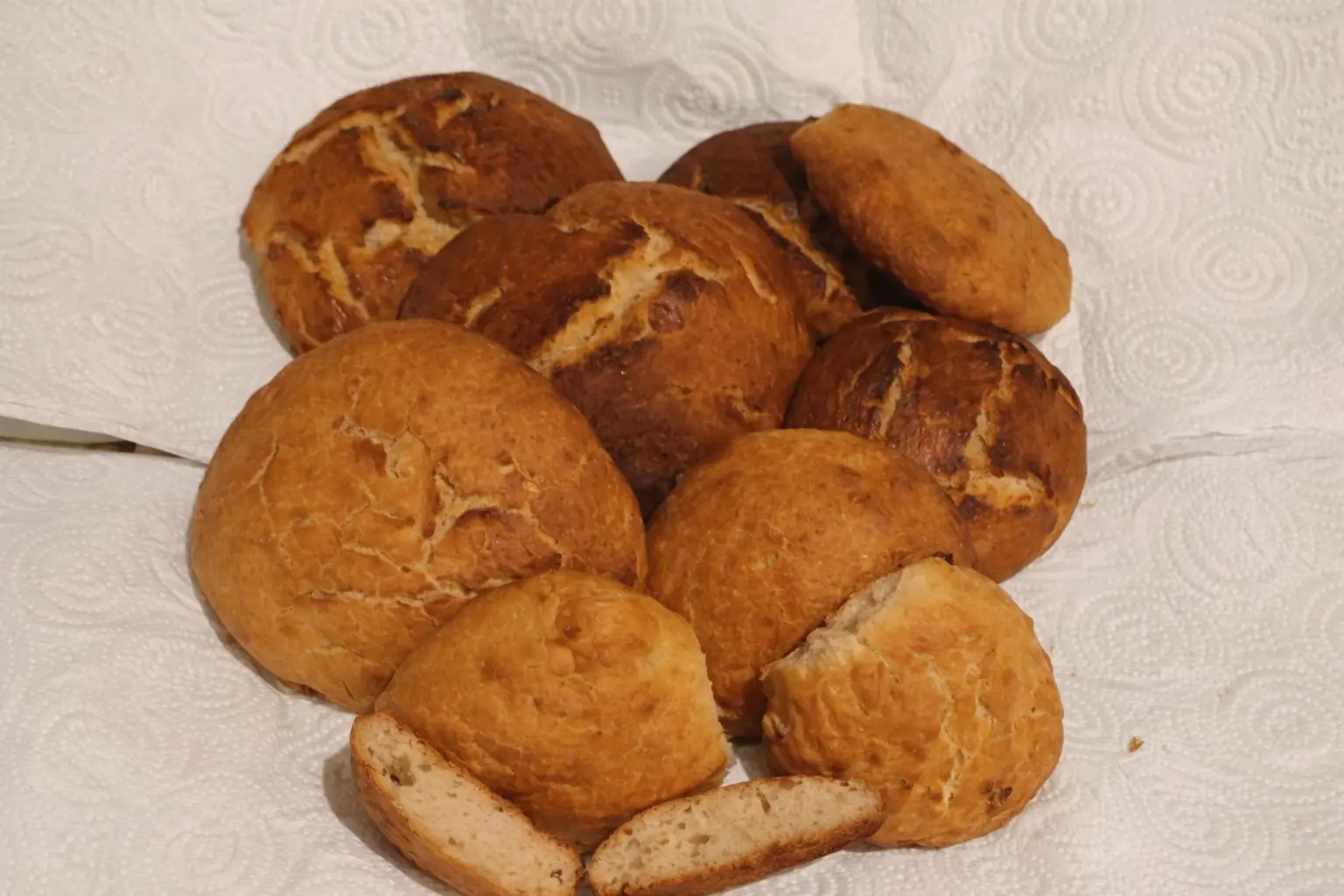
In the end, the recipe that inspired this text while I was cooking in the kitchen turned out like the one in the image. I set out to make bread. When I added a bit too much sugar and completely forgot the salt, what came out was something that looked like a pastry but stood there like a chubby loaf of bread. I had made both bread and pastry before. This time, while trying a "healthier" alternative with less flour, it didn't work. Once again, with my own hands, I couldn't do it.
To wrap it up, and with a new year approaching, the only thought this text left me with is this: it helps to write down the "if only" thoughts that stop us from trying. At worst, we remember why we didn't try again. But if we get a bit closer this time, we may also take the motivation we need for the next step with us.
You can also take a look at my article Opportunity Zone SWOT Method: A Practical Assessment Guide, where I touch on how the weaknesses mentioned in this text can turn into opportunities.
My wish from the new year, for you and for myself, is this: Trying less to do things right. Trying more.
Because sometimes, it doesn't become a pastry. But not having tried feels harder to me.
I wish everyone a happy new year.